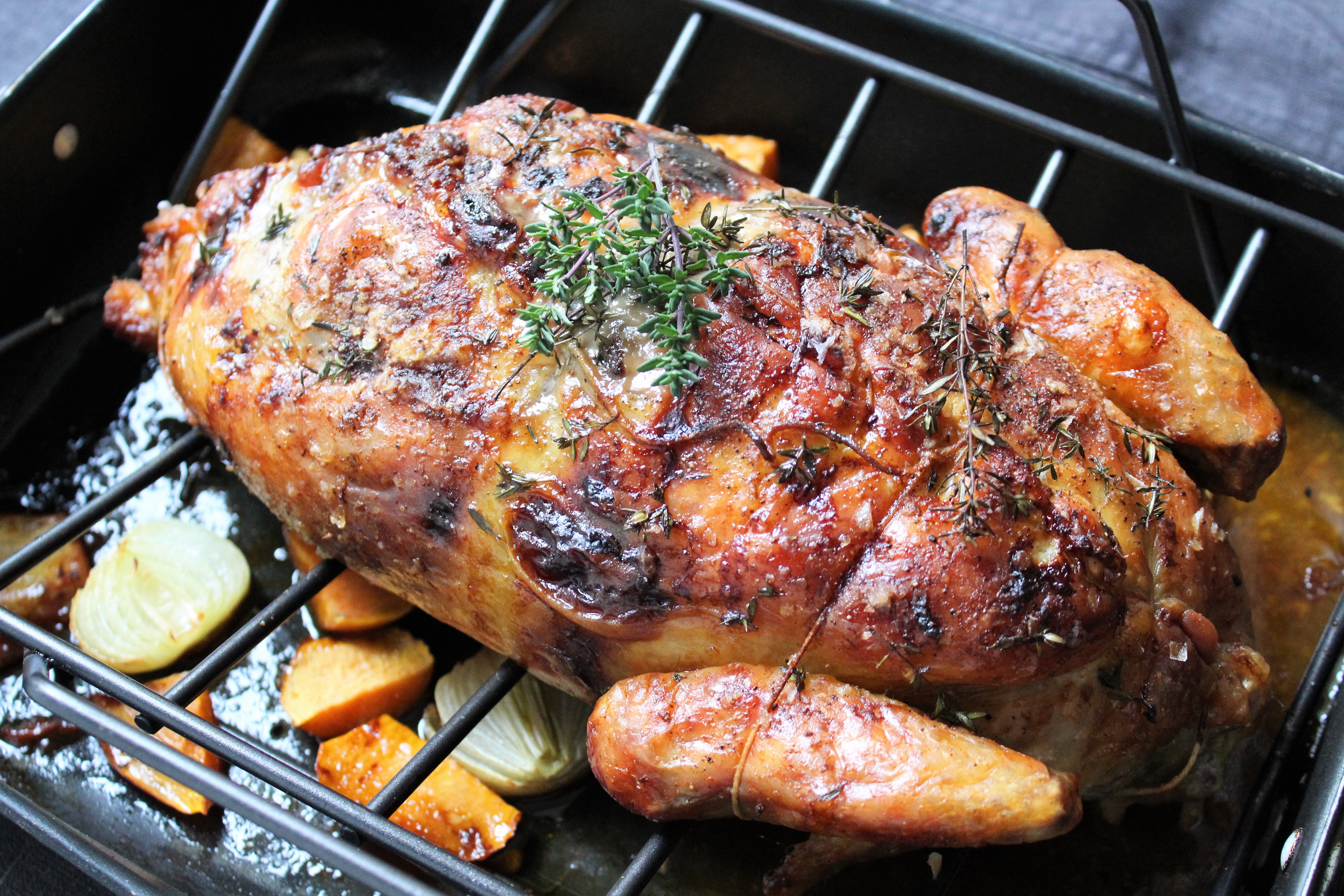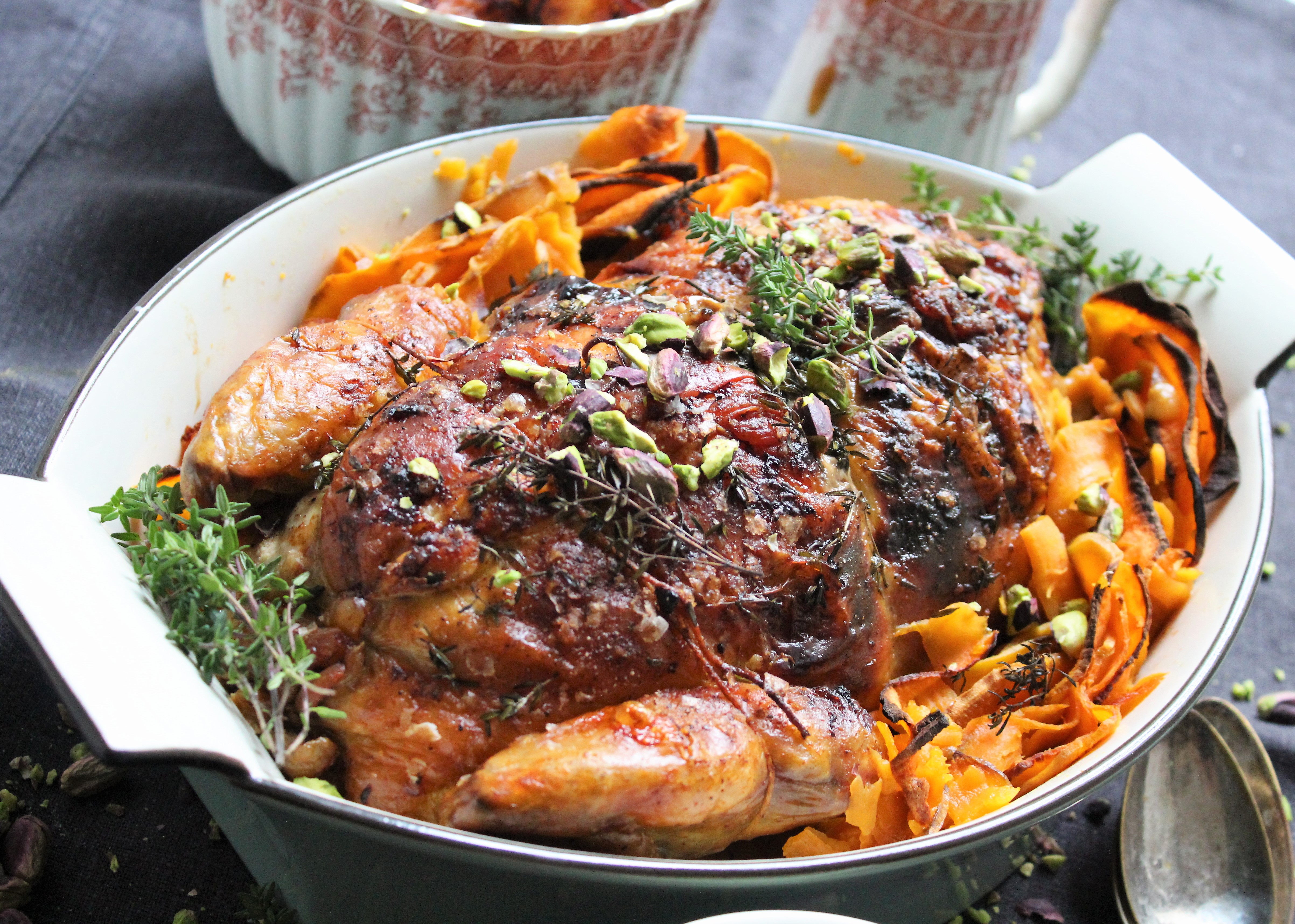
Roast guinea fowl with pear and chestnut stuffing is a wonderful centrepiece for a festive table and a delicious alternative to the traditional Christmas turkey. The combination of sweet pears, chestnuts, pistachios, fragrant herbs and dried fruit makes this a particularly lovely recipe for the autumn and winter months.
Known as faraona here in Italy, guinea fowl is a bird with a delicate game flavour, without the intensity of some other game birds. For a long time, I simply assumed that faraona was a type of chicken, until my butcher explained the difference.
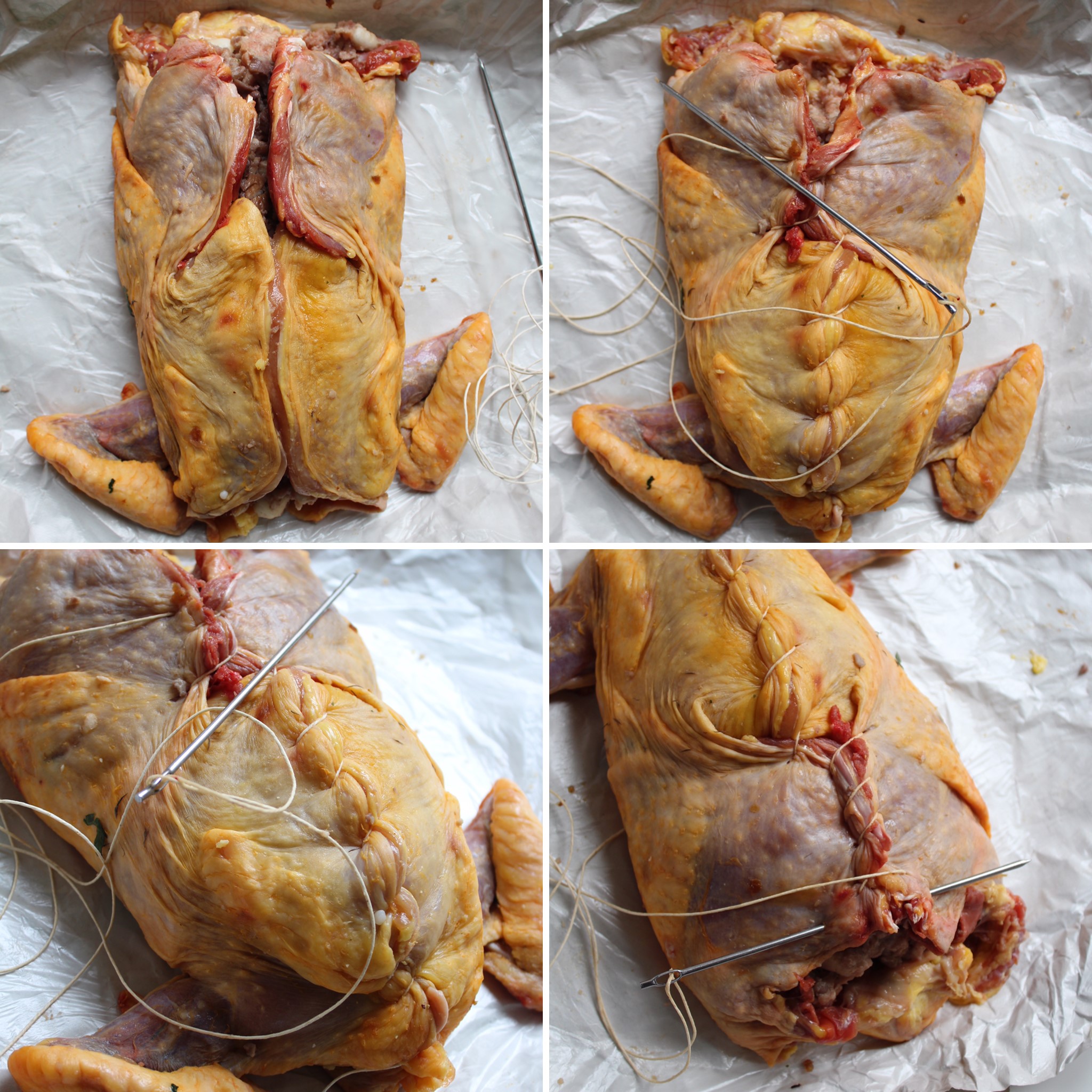
Although you can stuff a guinea fowl without deboning it first, I prefer to have it deboned and am lucky enough to have a butcher who happily does this for me. Over the years, he has also deboned ducks, legs of lamb and even rabbits for me. If you have the wings removed, you can roll the guinea fowl and tie it with kitchen string instead of stitching it closed. Rolling it may make for a prettier presentation when sliced, although you would miss out on the rather therapeutic pleasure of stitching it together with a large butcher’s trussing needle!
The stuffing is rich and slightly sweet, which complements the delicate game flavour of the guinea fowl beautifully. Poultry, game birds and pork all lend themselves particularly well to sweet, fruity and gently spiced accompaniments. I like to use some of my homemade Christmas fruit mince in this recipe, although a combination of currants and candied peel works well too.
One of the things I love about shopping at the markets in Italy is that you are often asked what you are planning to cook and how you intend to prepare it. Opinions are offered, suggestions are made, and you frequently come home with a couple of new recipes, particularly as there is almost always someone standing beside you who is more than happy to contribute to the conversation!
This is exactly how the stuffing for this recipe came about. When I asked my butcher for minced veal and pork, he suggested using the meatballs he had prepared, as they were already seasoned and contained breadcrumbs and parsley. It was an excellent suggestion and a lovely example of how a conversation at the market can influence what happens in the kitchen.
This recipe allows for a little creativity with both the ingredients and quantities, and the stuffing is equally delicious with chicken, duck or turkey.
A few notes before you begin
- Although you can use ready-cooked chestnuts, I recommend buying fresh chestnuts when they are in season. They can be roasted or boiled and prepared the day before.
- Roast potatoes, peas and roasted sweet potato make lovely accompaniments to this dish.
- Roasting sweet potato and onions beneath the guinea fowl adds a natural sweetness to the pan juices and creates a delicious gravy.
Roast Guinea Fowl with Pear and Chestnut Stuffing
Ingredients
- 1 deboned guinea fowl
- 200g minced veal
- 200g minced pork
- 4 tablespoons olive oil
- 3 celery ribs, finely chopped
- 1 medium onion, finely chopped
- 1 small carrot, finely chopped
- 1 cup roughly chopped fresh breadcrumbs
- 1 large sweet pear (I like to use the Decana variety)
- 350g fresh chestnuts
- 100g shelled pistachios
- 300ml chicken stock
- 1 cup Christmas fruit mince, or ½ cup mixed currants and candied peel
- 1 handful fresh parsley, chopped
- 60g butter, softened at room temperature
- 3 tablespoons fresh thyme leaves
- Salt and freshly ground black pepper
For the gravy
- ½ large sweet potato, cut into pieces
- 3 small onions, peeled
- Roasting pan juices
- Additional chicken stock, as required
- Cornflour, if required
You will also need
- A butcher’s trussing needle
- Kitchen string
- A roasting rack and baking tray
- A meat thermometer
Method
- Prepare the chestnuts. Using a sharp knife, carefully cut a cross into the hard outer shell of each chestnut. To roast them, place the chestnuts on a baking tray and cook at 200°C for approximately 20 minutes, or until tender. Alternatively, place them in a saucepan of water, bring to the boil and cook for approximately 20 minutes, or until soft. Roasting brings out their natural sweetness, while boiling is a convenient way to soften them. Allow the chestnuts to cool slightly before removing both the outer shell and inner skin. Cut each chestnut into quarters. If preparing them the day before, refrigerate until required.
- Prepare the stuffing. Heat the olive oil in a large frying pan over medium heat. Add the finely chopped onion, celery and carrot and cook gently until the onion is translucent and the vegetables have softened. Set aside to cool.
- Combine the cooled vegetables with half the thyme, the parsley, chestnuts, pistachios, minced veal, minced pork and breadcrumbs. Pour over the chicken stock and use your hands to thoroughly combine the ingredients, allowing the breadcrumbs to absorb the stock.
- Peel and core the pear, cut it into small cubes and gently mix it through the stuffing.
- Preheat the oven to 180°C (conventional/static oven).
- Lay the deboned guinea fowl skin-side down on a clean work surface.
- Spread the fruit mince, or the mixture of currants and candied peel, evenly over the surface of the guinea fowl. Arrange the stuffing in a loaf-like shape down the centre, taking care not to overfill the bird. Any remaining stuffing can be baked separately until its centre reaches 74°C.
- Starting at the neck, carefully stitch the sides of the guinea fowl together using a butcher’s trussing needle and kitchen string. Continue until you reach the bottom, sew it closed and secure with a knot. Use a separate piece of kitchen string to tie the wings close to the body. Alternatively, if the wings have been removed, roll the guinea fowl around the stuffing and secure it with kitchen string.
- Combine the remaining thyme with the softened butter and rub it generously over the guinea fowl. Season with salt and freshly ground black pepper.
- Place the sweet potato and onions in the base of a roasting tray. Position the guinea fowl on a roasting rack above the vegetables, with the stitched side facing upwards.
- Roast the guinea fowl. Cook for approximately 1½ hours, or until a meat thermometer inserted into the thickest part of the poultry and the centre of the stuffing registers at least 74°C. Cooking times will vary depending on the size of the bird and the amount of stuffing. Remove from the oven and allow to rest for at least 15 minutes before carving.
- Prepare the gravy. Pour the roasting pan juices into a saucepan, skimming off the excess fat. Add the roasted sweet potato and onions and blend until smooth using a handheld blender. If the gravy is too thick, gradually add chicken stock until you achieve the desired consistency, then bring to a gentle boil.
- If the gravy needs thickening, mix a little cornflour with cold water or cold chicken stock to form a smooth slurry. Gradually stir this into the hot gravy and bring to a gentle boil, stirring continuously until thickened. Taste and adjust the seasoning if necessary.
- Remove the kitchen string, carve the guinea fowl into generous slices and serve with the warm gravy and your favourite seasonal vegetables.
For a more traditional method of preparing gravy, you can also refer to my recipe for Thanksgiving Turkey with Stuffing and Gravy.